Watch Out for These (Arthropod) Spring Home Invaders
(Updated: March 10, 2023, 3:52 a.m.)
Note: This post was originally published March 2021, and updated March 2023
Insects and other arthropods are feeling the warm weather and waking up for spring. Bees, social wasps, bugs, flies, ants, and other critters are getting busy with their 2021 plans. That means lots of the activity outdoors that sometimes continues indoors.
The NC State University Plant Disease and Insect Clinic has received a few samples of two of these invaders, species that may not be familiar to folks. Luckily neither are dangerous nor long-term visitors.
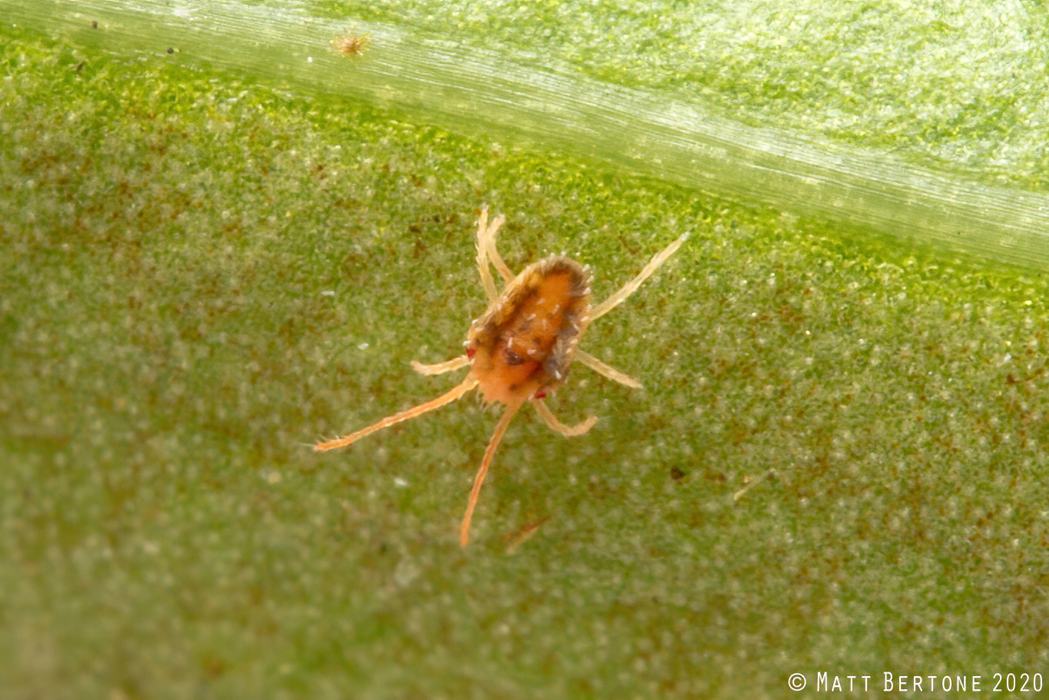
An adult clover mite (Bryobia sp.). These small mites are somewhat flattened with long front legs and a mottled green/orange body covered in scales.
The first is a type of mite I wrote about a while ago during one such year: clover mites (Tetranychidae: Bryobia sp.; above). These small arachnids are cousins of the more familiar spider mites and also feed on plants. They are most active in spring and fall, sometimes in mass numbers around yards where they crawl inadvertently into homes. When people see them they may get frightened and squish them, producing a blood spot. Fear not, though: this is the poor mite's blood as they do not bite humans or other animals.
Clover mite infestations typically only last a short time (few weeks) and the mites can be simply vacuumed up. They require some humidity, so they are often found dead in homes or perish quickly, due to being dryer than the outdoors. For information about the control of these mites in lawns, please see our fact sheet on clover mites.
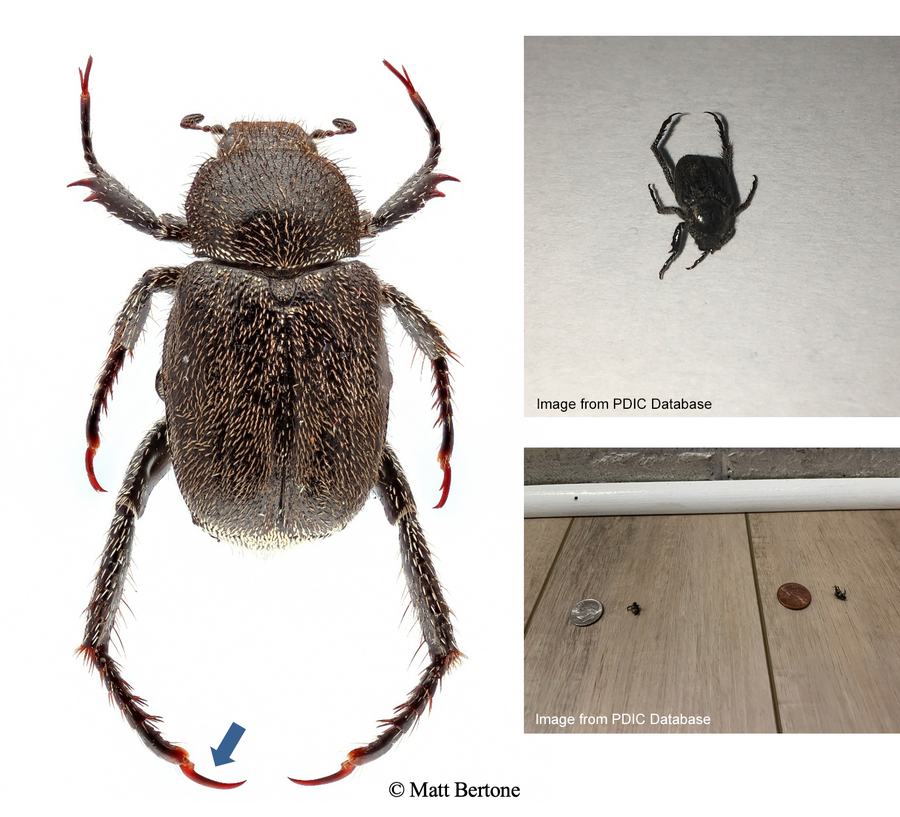
The "dark Hoplia" (Hoplia trivialis), a spring-active scarab beetle that sometimes enters homes. Note the dark brown/black body covered in hairs and pale scales. The single large claw on the hind legs (arrow) is diagnostic for this genus. Inset images show photos submitted of these beetles indoors.
The second invader is a type of scarab beetle, called the dark Hoplia (Hoplia trivialis) or monkey beetle (above). These smallish, dark beetles are covered in hairs and have a single massive claw on each hind leg (diagnostic for this genus in North America). They overwinter as larvae and pupate early in the spring. Adults emerge and will visit flowers and plants to feed, but are not considered a plant pest.
We have had several samples over the years (two this week) regarding these beetles entering homes. What's even more interesting is that a few of the situations involved them coming in chimneys. Why they do this we're not sure, but just like the mites, these nuisance invaders are harmless, sporadic, and ephemeral. We do not recommend any chemical sprays for these beetles as there is no predictable site of application and homeowners can easily remove the beetles safely from their home using a vacuum or collecting them otherwise to return to the outside.
Update (March 2023):
The client who contacted us with dark Hoplia beetles coming in the chimney reported that it was happening again, and even recorded the following video:
The swarming of the chimney is undeniable, but what's causing the beetles to be attracted to it? Perhaps a chemical?
I turned to scarab expert Dr. Art Evans to see if he had any ideas. Of course his expertise was enlightening:
"This species often engages in early spring mating swarms around prominent features on the landscape. I’ve seen them swarming on isolated small pines and church signs. I suspect that this is the case here, too."
Many insects use distinct landmarks to gather around and find mates of the same species. Apparently this chimney is popular with the local population...the beetles from last year must have told their larvae where to go ;)