It's feeling a lot like spring out there! As the warm weather bring feelings of joy from longer days and more time outside, it also means that insects and other arthropods are waking up and becoming active after the long, cold winter (for example, some mites and beetles).
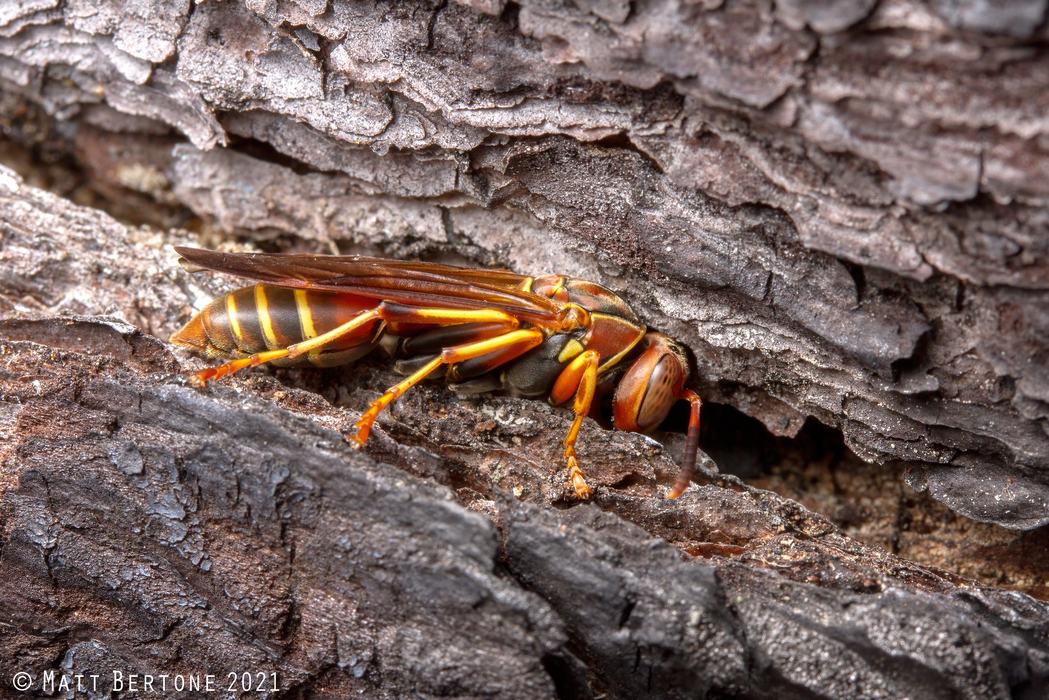
One group of insects that are conspicuous at this time of year are the social wasps in the family Vespidae, including paper wasps, yellowjackets, and hornets. These insects overwinter as mated queens, the rest of their colonies having died out the previous year. These queens are now becoming active and emerging from their resting sites (which may include people's homes). The wasps may hover around properties looking for the best place to start their new colony, or just be flying around yards to get to the best site.
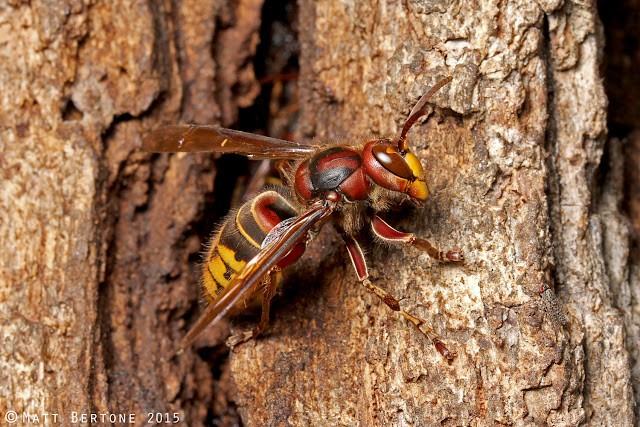
If left alone, these wasps are not likely to sting; however, it does happen sometimes. Luckily, barring any allergies, these wasps are not dangerous to most people. Monitoring where they are beginning to make nests may help with controlling them and discouraging their colonies. Paper wasps typically build small colonies under the overhangs of homes and other human structures, while yellowjackets often excavate a hole in the ground where they build their paper nest. Hornets are the largest of these wasps, and typically build their nest in tree cavities (though sometimes in homes and buildings).
Due to the large size of some of these wasps, many people fear that they are the invasive Asian giant hornets (incorrectly called "murder hornets"). This species of large wasp is not yet found outside the extreme Pacific Northwest of the country, so the wasps seen here in NC are almost certainly not that species. For information on how to ID look-alikes of the Asian giant hornet please see this side-by-side comparison.
For more information on management of these wasps, please see the following fact sheets: